


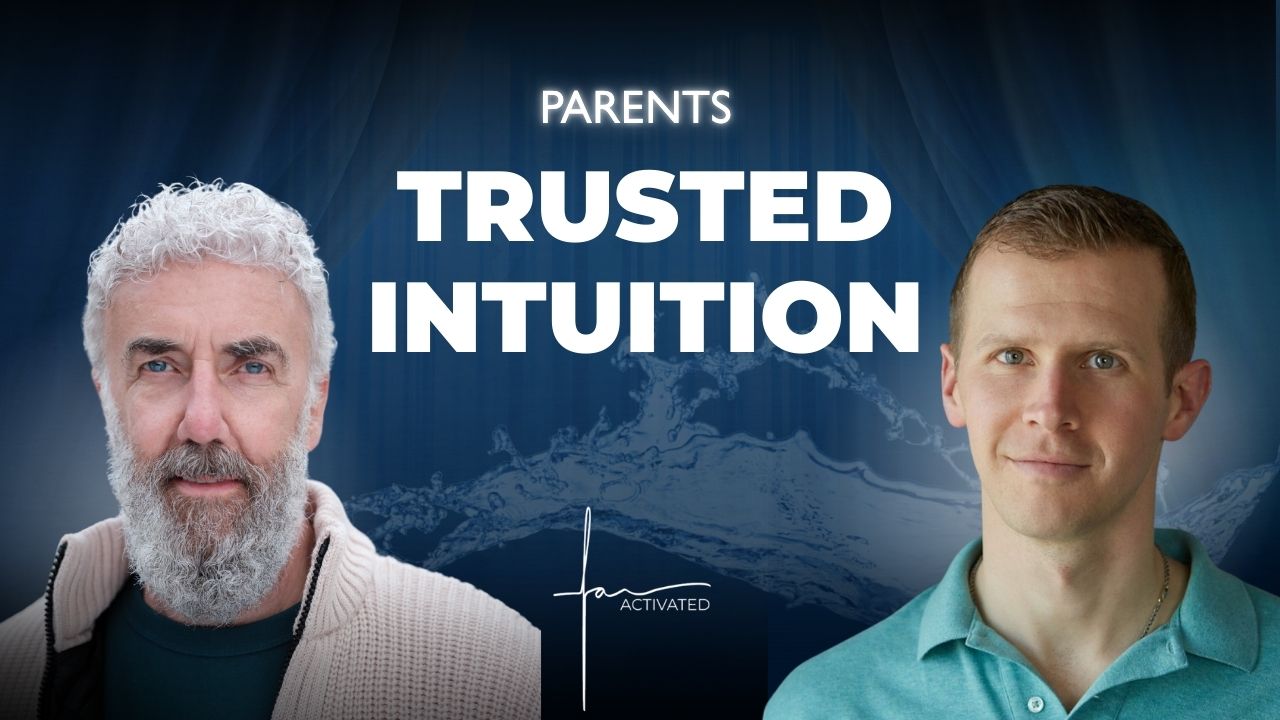
My Conversation with Jared Ralsky on Non-Toxic Living, the Noise of Modern Wellness, and What Actually Moves the Needle
By Ian Clark
When I sit down with people in the health space, I am always looking for one thing above all else: signal.
Not noise. Not trends. Not another wave of hype dressed up as wisdom.
Signal.
That is exactly what stood out to me in my conversation with Jared Ralsky.
Jared’s path into wellness was not the typical one. He did not come out of a conventional health background, nor did he build his life around becoming a public figure in this space. His professional roots were in the NBA, where he worked as a basketball executive and talent scout for multiple organizations. He lived inside one of the most corporate, performance-driven environments you could imagine. But when the world shifted during the pandemic, so did his life. That disruption ended up opening a different door—one that moved him into health coaching, research, content creation, and ultimately a mission centered around non-toxic living.
What I appreciate about Jared is that he is not trying to impress people with complexity. He is trying to help them simplify.
And today, that matters more than ever.
The world is overwhelmed
One of the biggest themes that came out of our discussion was just how overloaded people are.
There is too much information.
Too many voices.
Too many opinions.
Too many conflicting health accounts.
Too many products.
Too many protocols.
Too many people speaking with certainty about things they have not truly lived.
That level of overload does not create freedom. It creates paralysis.
Jared made a point that I think is incredibly important: if someone follows 20 different health accounts online, they are likely to end up more confused than when they started. They will hear one person say carnivore, another say plant-based, another say detox, another say never detox, another say biohack everything, and another say throw your phone in the ocean and move to a farm.
What happens then?
Decision fatigue.
And when people are exhausted, they do not need 47 steps. They need one or two clear moves they can actually make.
That is where real change begins.
Health is not built on aesthetics
Jared also brought up something that needs to be said more often: the health world is full of people selling solutions who do not look healthy, do not radiate health, and do not appear to be living what they are preaching.
That may sound blunt, but it matters.
If someone is going to teach health, there should be evidence of vitality—not perfection, but vitality. Clarity in the eyes. Energy in the face. Strength in the presence. You should be able to feel that something is working.
Because real health is not branding. It is embodiment.
And this is one reason discernment matters so much right now. Titles do not equal truth. Credentials do not automatically equal wisdom. A polished message does not equal lived experience.
What Jared said really resonated with me: people have to learn to listen to those who are actually living it.
The hidden problem with modern wellness culture
One of the things I found most interesting was Jared’s honesty about social media.
Here he is, making a living through content, and yet he openly admits that platforms like Instagram can be deeply toxic to human wellness. That kind of honesty is rare.
And he is right.
These platforms are built to stimulate, agitate, distract, compare, inflame, and fragment your attention. That is the opposite of healing. That is the opposite of peace. That is the opposite of clarity.
So now we have this strange situation where many people are trying to learn health inside a mechanism that is fundamentally hostile to human regulation.
That does not mean the platform itself has no use. It means you need to understand the environment you are operating in.
Jared’s perspective was simple and wise: if you are going to learn from someone, get off the feed and go deeper. Read their long-form work. Listen to their podcast. Join their newsletter. Reduce the noise around the signal.
That is where discernment begins to return.
Non-toxic living matters — but fundamentals matter more
Jared’s platform focuses heavily on non-toxic living, especially in the home and kitchen. He helps people identify cleaner swaps for everyday items like cookware, utensils, cutting boards, air fryers, and storage.
And I agree with him completely that your environment matters.
It is hard to be healthy in an unhealthy environment.
The air you breathe matters.
The materials you cook with matter.
The products you bring into your home matter.
The invisible burden of toxins matters.
But he also said something very important: none of that replaces the foundations.
You can buy the best cookware in the world, but if you are not moving your body, not getting outside, not sleeping properly, and not eating real food, you are still missing the biggest levers.
That is the trap many people fall into. They do the easy things that feel productive—buying a supplement, purchasing a cleaner pan, getting the latest health gadget—while neglecting the hard disciplines that actually change the body.
Buying something feels like action.
Discipline is action.
And the body knows the difference.
What the NBA reveals about human health
Because Jared came from the NBA world, I was especially interested in his perspective on professional athletes.
Most people assume elite athletes are the gold standard of health. But what he observed was something very different.
These are genetically gifted individuals operating at the highest physical levels in the world, yet many still live with poor nutrition, high stress, excessive screen exposure, circadian disruption, travel fatigue, and fragmented recovery. Some are eating junk food, sleeping poorly, and relying on conventional systems that are not looking at the whole person.
That is not a criticism. It is simply reality.
And it reveals something much bigger: performance is not the same as health.
You can have talent and still be running a deficit.
You can have a strong body and still be wearing it down.
You can be at the top of a profession and still be disconnected from the fundamentals that keep a human being resilient.
That is not just true in professional sports. It is true in every industry.
The psychology of change
This was one of the deepest parts of the conversation for me.
Why do people resist what could help them?
Why do they ignore the biggest elephants in the room and obsess over the smaller ones?
Why do they cling to confusion when simplicity is available?
Part of the answer is psychological overload. Part of it is insecurity. Part of it is habit. Part of it is identity.
But one of Jared’s best insights was this: people need confidence before they need complexity.
When he coached people one-on-one, he did not try to turn their entire life upside down in a week. He gave them simple, meaningful steps. Eliminate a few foods. Keep it sustainable. Build wins. Create momentum.
That works.
Not because it is flashy, but because it is human.
People are already exhausted. They do not need to be crushed under a giant protocol. They need traction. They need encouragement. They need someone to say, start here.
That is what good coaching does.
Discernment begins when the noise goes down
Toward the end of the conversation, we got into a subject I care deeply about: how do you know who to trust?
Jared’s answer was intuitive and practical.
Pay attention to the people who are actually living what they talk about.
Pay attention to who gives you clarity instead of confusion.
Pay attention to who lights something up in you when they speak.
Pay attention to the people whose message helps you get healthier, calmer, clearer, and more grounded.
That is discernment.
But he also made the point that many people’s intuition is blunted because their bodies and minds are overloaded. When your system is inflamed, overstimulated, sleep-deprived, and chronically distracted, it becomes much harder to hear what is true.
So sometimes the first step in discernment is not finding a better expert.
It is cleaning up your own signal.
What I took away from this conversation
Jared’s mission is not really about pots and pans.
It is about reducing friction.
Reducing confusion.
Reducing toxic load.
Reducing decision fatigue.
Reducing the noise so people can finally act.
That is valuable.
Because health does not usually fail from one dramatic event. It fails from accumulation. Small burdens. Small compromises. Small blind spots. Day after day. Year after year.
And healing often works the same way.
One clear choice.
One cleaner habit.
One better meal.
One more walk outside.
One less toxic exposure.
One less distraction.
One more signal.
That is how people start getting their lives back.
Final thought
I respect people like Jared because he is in the trenches. He is observing real patterns, helping real people, and learning in real time. He is not pretending to have every answer. He is trying to simplify the path so people can actually begin.
And in this era of noise, that is a real service.
If there is one thing I would leave you with from this conversation, it is this:
Do not let complexity stop you from taking the next right step.
You do not need to solve everything today.
You do not need to know everything today.
You do not need the perfect protocol today.
You need clarity.
You need simplicity.
You need movement.
That is where transformation starts.

Episode 51: The Real Upgrade Begins Within
The Hidden Reason You’re Not Healing (It’s Inherited)